
How Does a Porta Potty Actually Work?
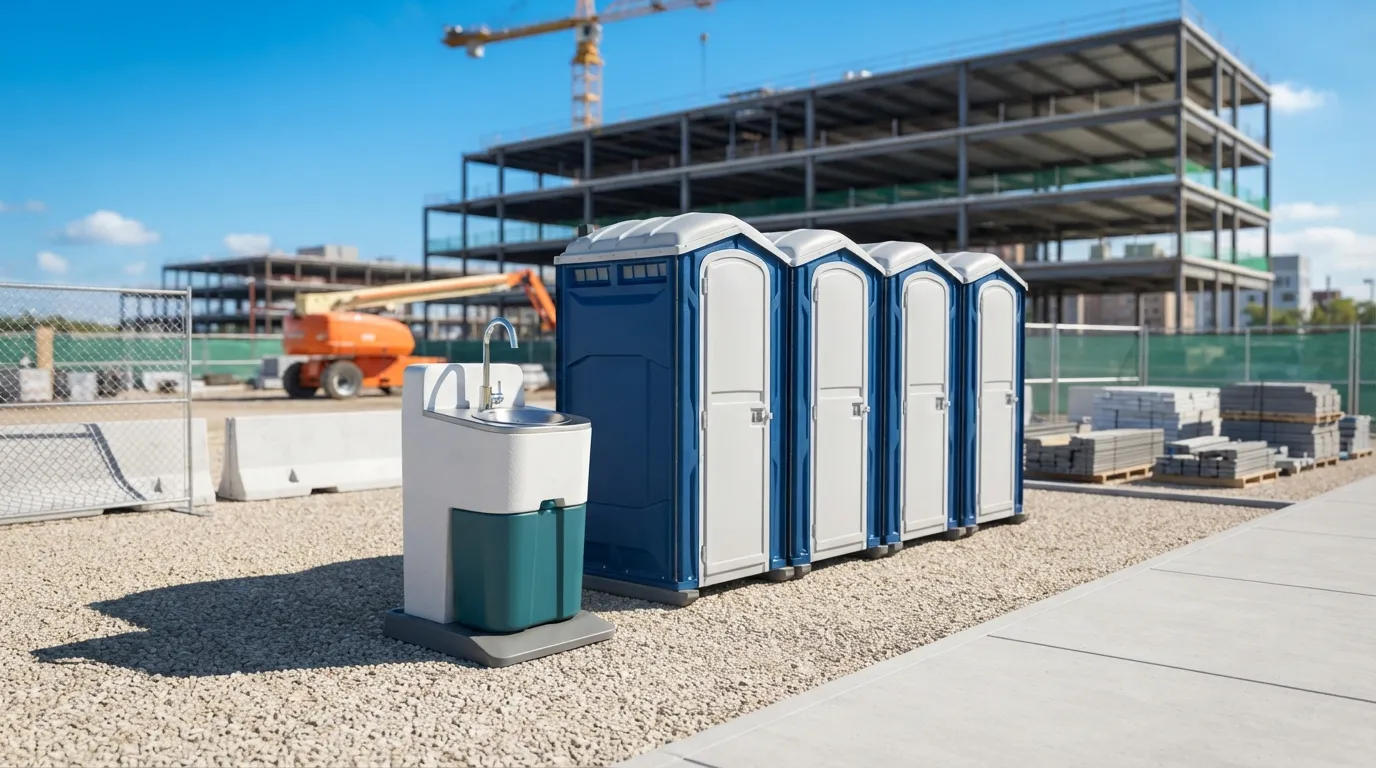
No pipes, no flush handle, no drain. Under the seat sits a holding tank, usually 60 to 70 gallons on a standard unit, and that tank holds everything until a service truck pumps it out. A packet of blue chemical treatment goes in during setup and after each pumping. It breaks down waste, knocks back odor, and keeps the tank from foaming during a hot Wichita summer. There's no water tank feeding it, so a construction worker running to the porta-potty on break isn't flushing anything, the waste just drops into the tank below. Ventilation pipes built into the unit vent gas up and out through a roof stack, which is why placement and airflow matter on a job site. For crews asking how many units they actually need, our sizing guide walks through headcount and duration. Footprint runs about 44 by 48 inches on the ground, small enough to tuck into a corner of a lot without blocking a fire lane or temporary fence line.
How Does a Portable Sink Work?
A portable handwashing station runs on a self-contained fresh water reservoir and a foot pump or hand crank, no plumbing tie-in required. Fresh water sits in one tank, greywater drains into a second tank below, and soap comes from a built-in dispenser. Federal rule 29 CFR 1910.141(d)(2) requires soap and towels or a hand-drying device at washing facilities, and hand sanitizer alone doesn't satisfy that. That's why a proper portable sink rental always includes a soap reservoir and paper towel dispenser, not just a sanitizer pump. For crews using paints, coatings, herbicides or insecticides, OSHA 1926.51(f)(1) specifically requires washing facilities near that work, separate from general sanitation. A hand sanitizer station is a fine supplement but it isn't a substitute where that rule applies.
How Do Flushable Porta Potties Work?
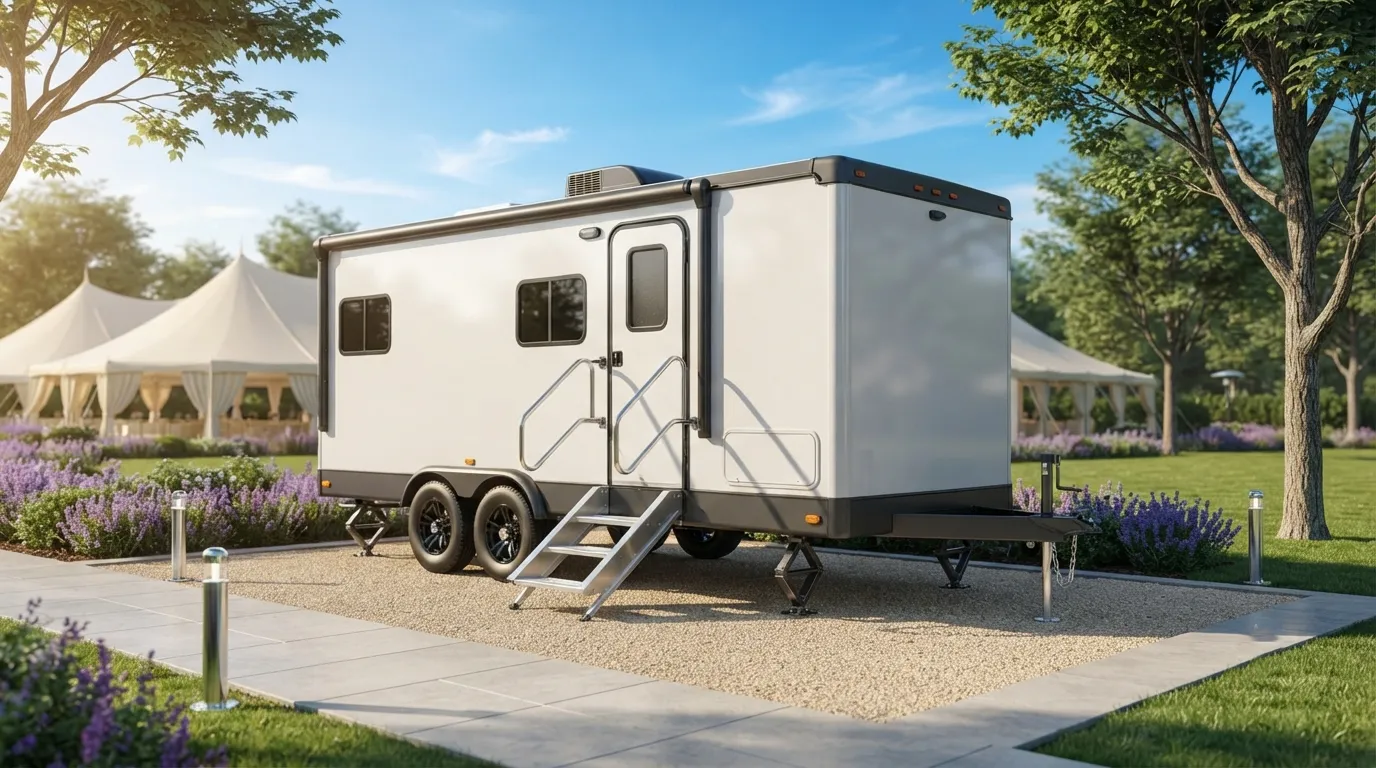
A deluxe flushable unit adds a small onboard freshwater tank and a foot-pump or battery flush that rinses the bowl into the same holding tank below, so it feels closer to a real bathroom without any sewer connection. Everything still collects in a holding tank, there's no drain line out. That's the difference between a standard unit and a deluxe one: the deluxe swaps a static bowl for a flush action while keeping the same self-contained plumbing. For weddings, corporate events or any job where guests expect more than a bare-bones stall, a restroom trailer goes a step further with real fixtures, running water, and separate stalls, up to 4 or 8 stalls depending on headcount. Camping trips run the same core mechanism at a smaller scale: a camping porta potty uses the same sealed-tank, chemical-treatment setup, just sized down for lighter use over a weekend at a lake or campsite outside Wichita.
Why Does a Porta Potty Need Chemical Treatment?
Chemical treatment isn't optional, it's what keeps a sealed tank from turning into a health and odor problem between service visits. The blue liquid or packet added at setup contains deodorizers and enzymes that break down solid waste, control bacteria growth, and suppress the smell that builds in a tank sitting under summer heat. Ask about portable toilet chemicals near you and most Wichita rental companies use a similar blue-dye formula, it's standard across the industry. ANSI/PSAI Z4.3, the portable sanitation service standard, sets a baseline service interval of once a week for up to 10 users across a 40 hour week, and chemical treatment is refreshed at every pump-out to keep that interval workable. Job sites near McConnell AFB, roughly 9.8 miles southeast of Wichita, and events out toward Andover, about 13.5 miles east, run on the same treatment cycle regardless of distance from the yard. Skip the chemical refresh and you get foaming, odor, and a tank that fills faster than expected.
Frequently asked questions
Do porta potties smell if they're serviced on schedule?
A unit on a normal weekly service cycle, per the ANSI/PSAI Z4.3 baseline, shouldn't have a strong odor at handoff. Chemical treatment and ventilation stacks handle most of it. Heat, overuse, or a skipped service are what cause the smell complaints. See more on odor control for what actually drives it.
How often do porta potties get pumped or cleaned?
Standard rentals get serviced roughly once a week under the ANSI/PSAI Z4.3 baseline for up to 10 users, though high-traffic events need more frequent visits. Our cleaning schedule guide breaks down what changes that interval for busier sites.
What's the difference between a septic tank and a porta potty tank?
A porta potty tank is fully self-contained and gets pumped by a service truck on a rental schedule. A home septic tank is buried, tied into household plumbing, and typically pumped every 3 to 5 years depending on tank size and household size. See septic pumping service for the home side.
Can I use regular household chemicals in a porta potty?
No. Standard household cleaners aren't formulated for holding tanks and can interfere with the breakdown process or damage seals. Rental companies supply the correct treatment at setup and each service visit, so there's no need to add anything yourself between pump-outs.
How many porta potties does a job site in Wichita need?
OSHA 1926.51(c) sets the baseline: one toilet for 20 or fewer workers, scaling up from there. Crew size, shift length, and site layout all factor in beyond the bare minimum. This sizing guide walks through the math for a Wichita crew.
Next step
Get a delivery date
Tell us the address, the dates and the headcount. We size the order and confirm the route.