
How many restrooms does a marathon route need?
Start with the corral, then think about the course as its own separate math problem. OSHA 1926.51(c) sets construction ratios, but race organizers use it as a reasonable baseline: one toilet for smaller gatherings, scaling up fast once you cross a few hundred people. A start line with 2,000 runners plus spectators often needs a dozen or more standard porta potty rentals, clustered near the corral so nobody's warmup turns into a restroom hike.
Course placement is different. Runners spread out over miles, so you're not clustering, you're spacing. A unit every 2 to 3 miles works for most road races, with heavier placement near aid stations where people slow down anyway. For long courses that stretch toward Park City, 9.7 miles north, or Bel Aire, 11.7 miles northeast, that means renting for the full driving footprint, not just the finish area. Check our placement guide before you finalize the map, and use our how many porta potties do I need tool to sanity-check your count against field size.
Finish line areas deserve their own cluster, separate from the corral units, because that's where tired runners and family crowds collide at once. Add at least one ADA accessible porta potty per ADA Standards 213.2, which requires 5 percent of clustered units to be accessible, never fewer than one. A 60 inch turning circle under ADA Standards 304.3.1 matters here too, since finish-line pads get crowded with gear and volunteers.
What does race restroom rental cost in Wichita?
Pricing depends on unit count, duration and whether you need power or lighting on top of restrooms. A single-day standard unit rental runs in the $100 to $350 range, while multi-day events booked as a package land closer to event-day pricing built for crowds.
| unit | duration | typical price |
|---|---|---|
| standard | day | $150 |
| standard | event | $400 |
| ada | day | $230 |
| deluxe | day | $300 |
| trailer | event | $3,500 |
Larger races with VIP tents or sponsor areas often add a restroom trailer rental instead of relying only on standard units. Our 4 stall restroom trailer works well for finish-line hospitality zones, and a deluxe flushable porta potty is a step up for elite athlete or staff areas without going full trailer. Full cost breakdowns live on our porta potty rental cost and restroom trailer rental cost pages if you want to model a mixed layout before calling.
Delivery fees stack separately from unit rental, and a race spread across Wichita streets may need more than one delivery run if your course crosses town. Ask about consolidating drops to keep that fee down.
Why do race courses need light towers and power poles too?
Early starts and late finishes mean parts of your course run in the dark, and OSHA 1926.56(a) sets minimum illumination standards for work areas that race organizers borrow for safety planning. A light tower rental at the start corral and finish chute keeps footing visible before sunrise. Pair it with a temporary power pole for timing equipment, PA systems and food vendor needs.
If you're running a 200 amp service to a finish-line stage, brace the pole before load-in, not after. How to brace a temporary power pole comes down to a stable base plate, guy wires anchored away from foot traffic, and keeping the whole assembly clear of the accessible route required under ADA Standards 403.5.1, which sets a 36 inch minimum clear width. GFCI protection under OSHA 1926.404(b)(1)(ii) is standard practice anywhere power meets a wet or crowded area, and a race finish line qualifies on both counts.
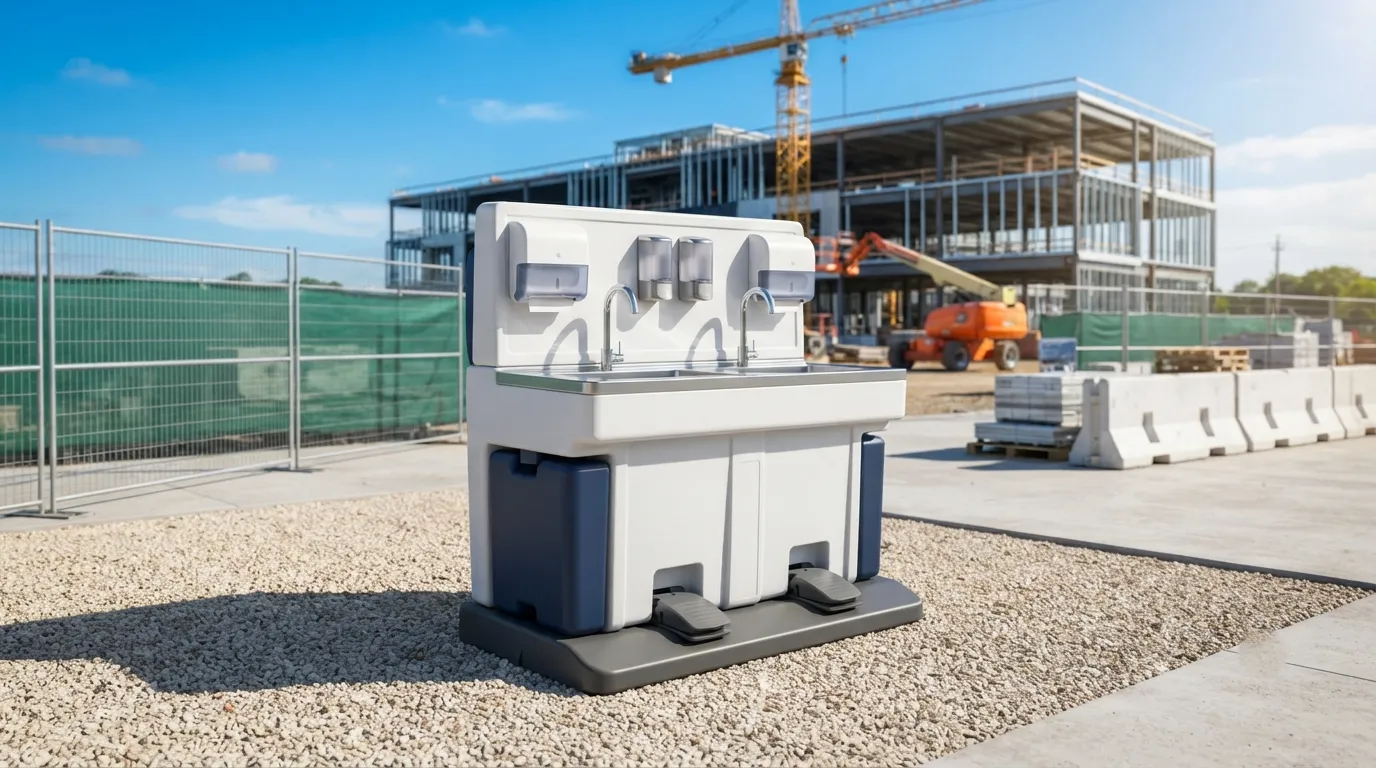
Runners need water too. OSHA 1926.51(a)(1) calls for an adequate supply of potable water at any worksite, and while a race isn't a construction site, aid stations follow the same logic. Pair your restroom plan with handwashing station rental units near food and medical tents, since soap and towels are required under 29 CFR 1910.141(d)(2). Hand sanitizer alone doesn't meet that standard.
For races that route through Derby, 12.2 miles southeast, or Andover, 13.5 miles east, factor in extra drive time for delivery trucks servicing multiple points along the course. Check our service areas page to confirm coverage before locking your route map. Crowd control barriers also help keep spectators off active traffic lanes near restroom clusters; see crowd control barrier rental for options.
Frequently asked questions
How far in advance should we book race restrooms?
Book 6 to 8 weeks ahead for anything over 500 runners, sooner for spring and fall race season when Wichita calendars fill fast. Smaller weekday 5Ks can often book 2 to 3 weeks out. Confirm your count early through request a quote.
Do we need separate units for volunteers and staff?
Yes, if your race has a large volunteer or medical team. Staff units near command tents keep bathroom lines from competing with runner traffic at aid stations and the finish corral.
Can we rent handwashing stations for aid stations?
Yes. Pair units with portable sink rental or hand sanitizer station rental near food and medical tents, especially anywhere gels, water and first aid supplies get handled together.
What happens if our race route crosses city limits?
Routes touching nearby towns like Haysville, 10.8 miles south, or Maize, 13.7 miles northwest, may need coordinated delivery windows. Tell us your full route when you request a quote so we can plan multiple drop points.
Do you offer emergency restroom delivery for last-minute race changes?
Yes. Weather reroutes and last-minute permit changes happen. Call our emergency porta potty rental line and we'll work your revised route into the delivery schedule fast.
Next step
Get a delivery date
Tell us the address, the dates and the headcount. We size the order and confirm the route.